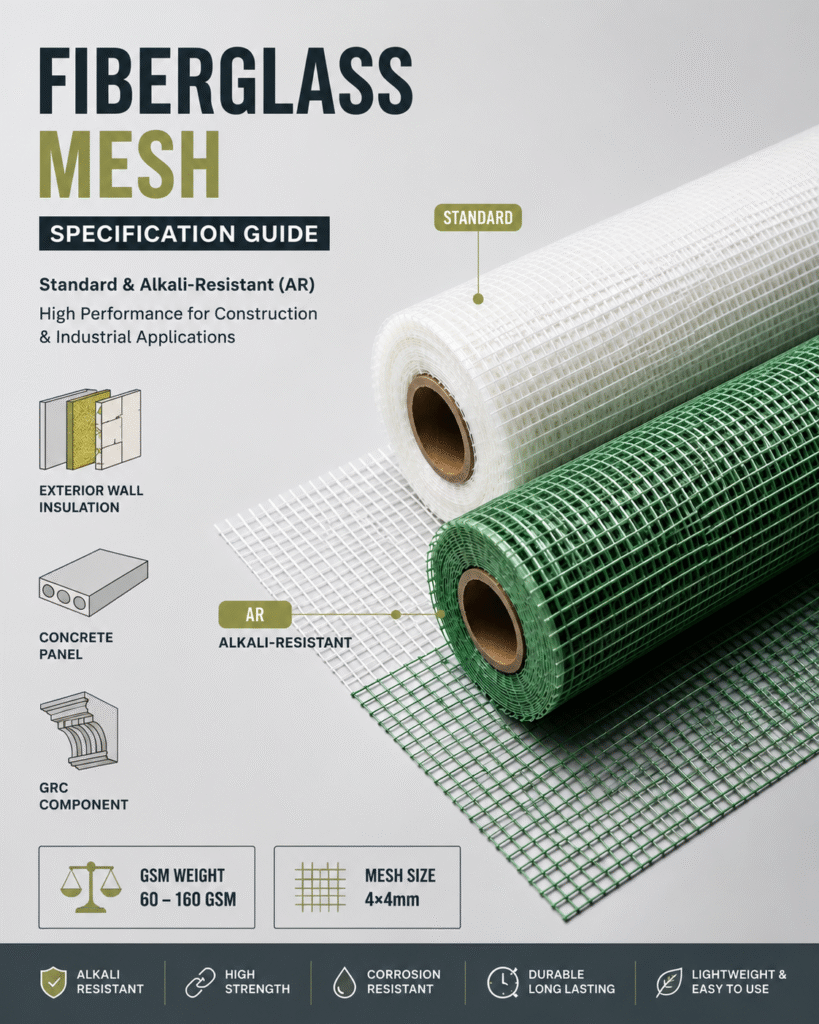
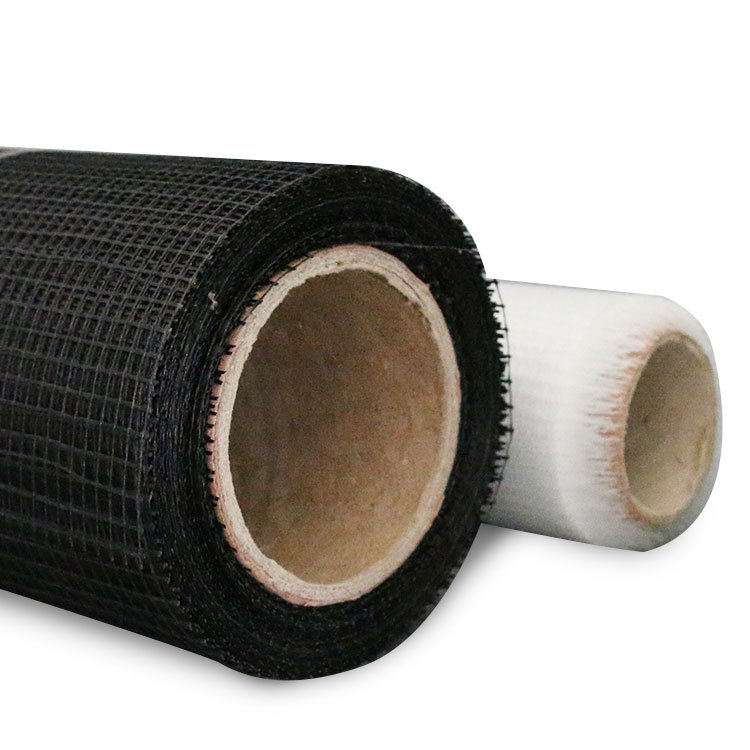
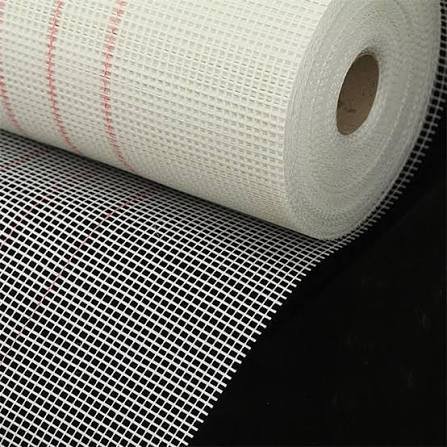
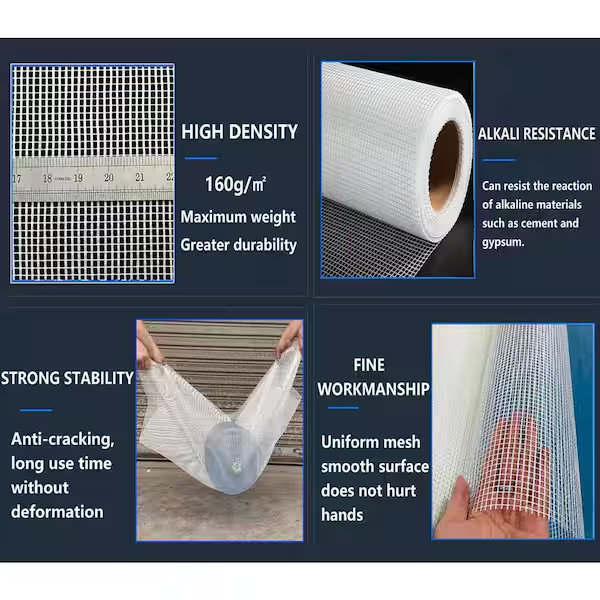
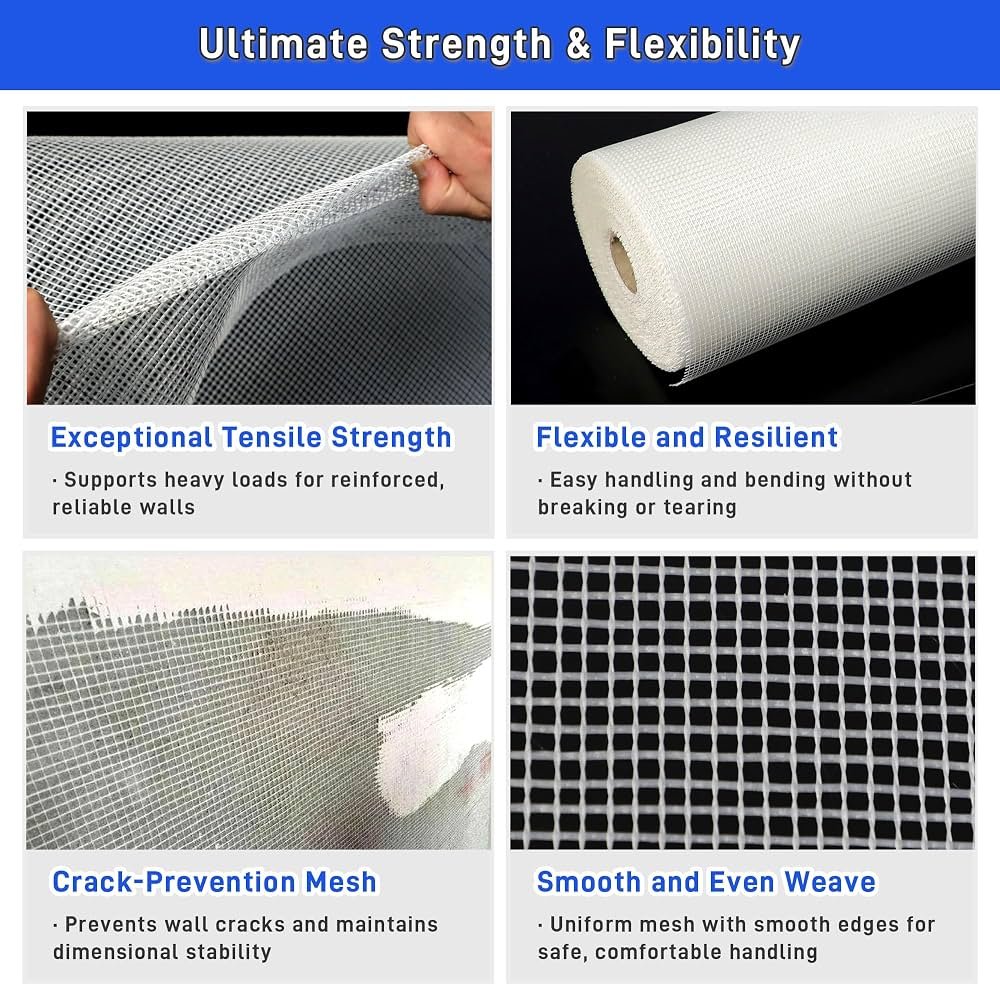
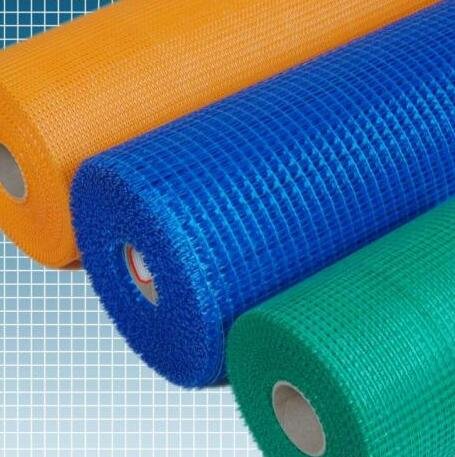
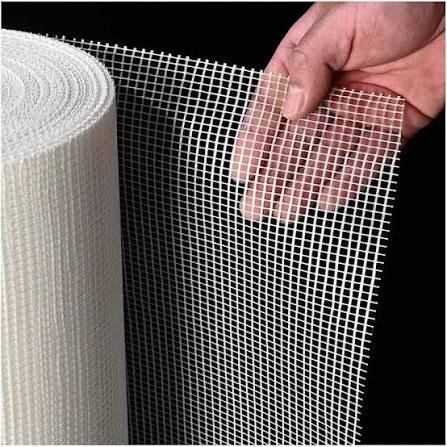
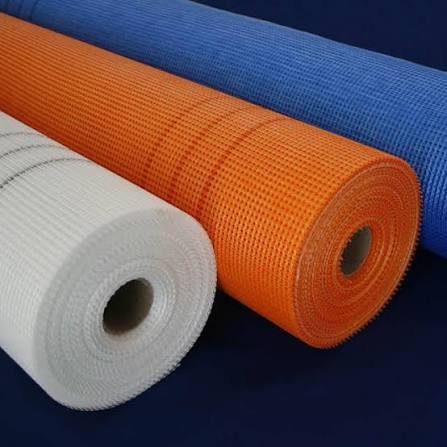
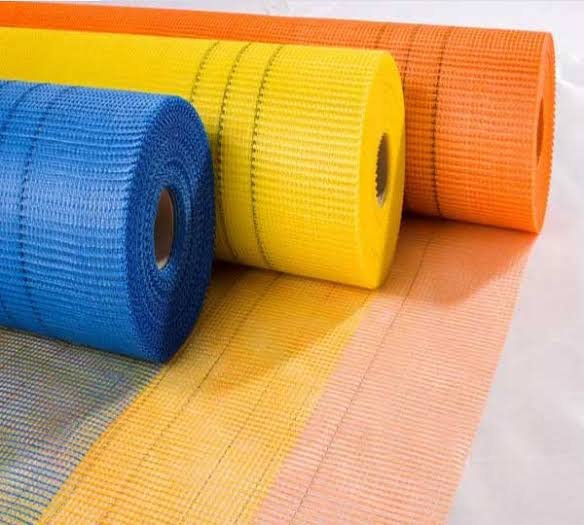
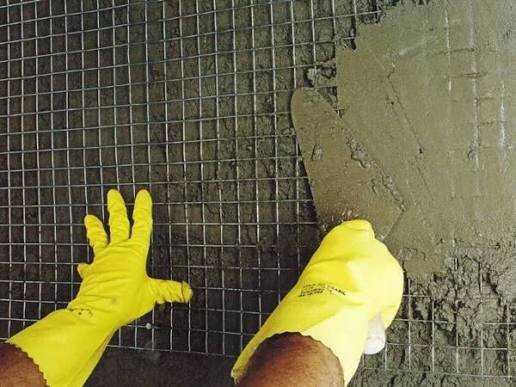
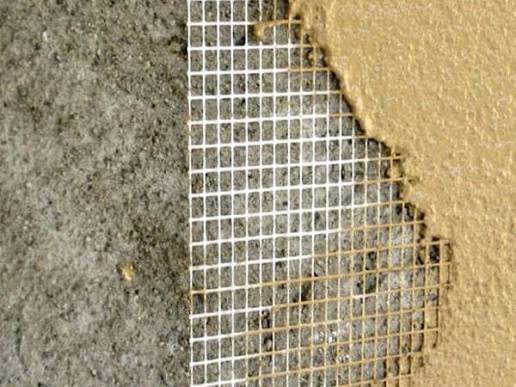
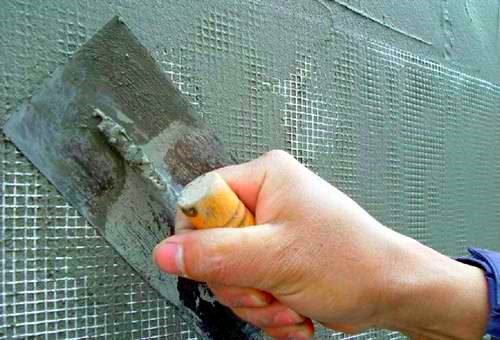
Fiberglass mesh is an important reinforcement material widely used in construction, concrete, insulation systems, and industrial applications. It helps improve crack resistance, tensile strength, and durability in different building projects.
However, choosing the right fiberglass mesh can be challenging because different applications require different specifications, including:
Mesh size
GSM weight
Tensile strength
Coating type
Alkali resistance
For buyers searching for a reliable fiberglass mesh supplier, understanding these specifications is essential to ensure product performance and project quality.
This guide explains fiberglass mesh specifications, major applications, the advantages of alkali resistant fiberglass mesh, and how to select the right supplier.
1. What Is Fiberglass Mesh?
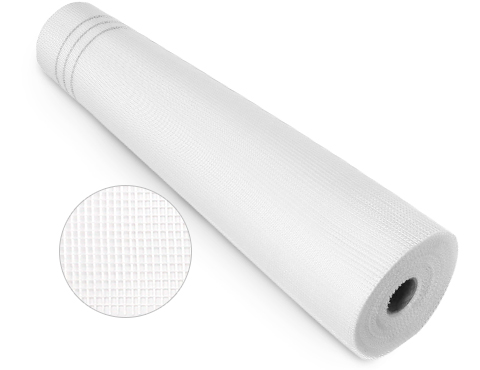
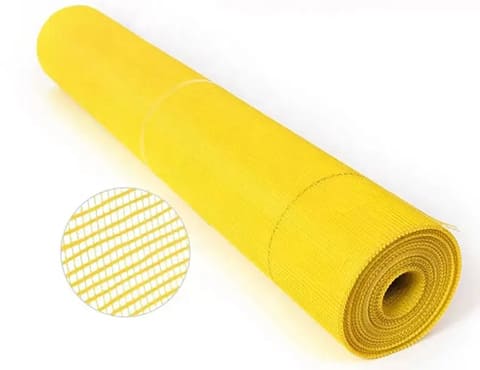
Fiberglass mesh is a woven material made from fiberglass yarns and coated with polymer or alkali-resistant materials.
The coating improves:
Chemical resistance
Durability
Tensile strength
Bonding performance
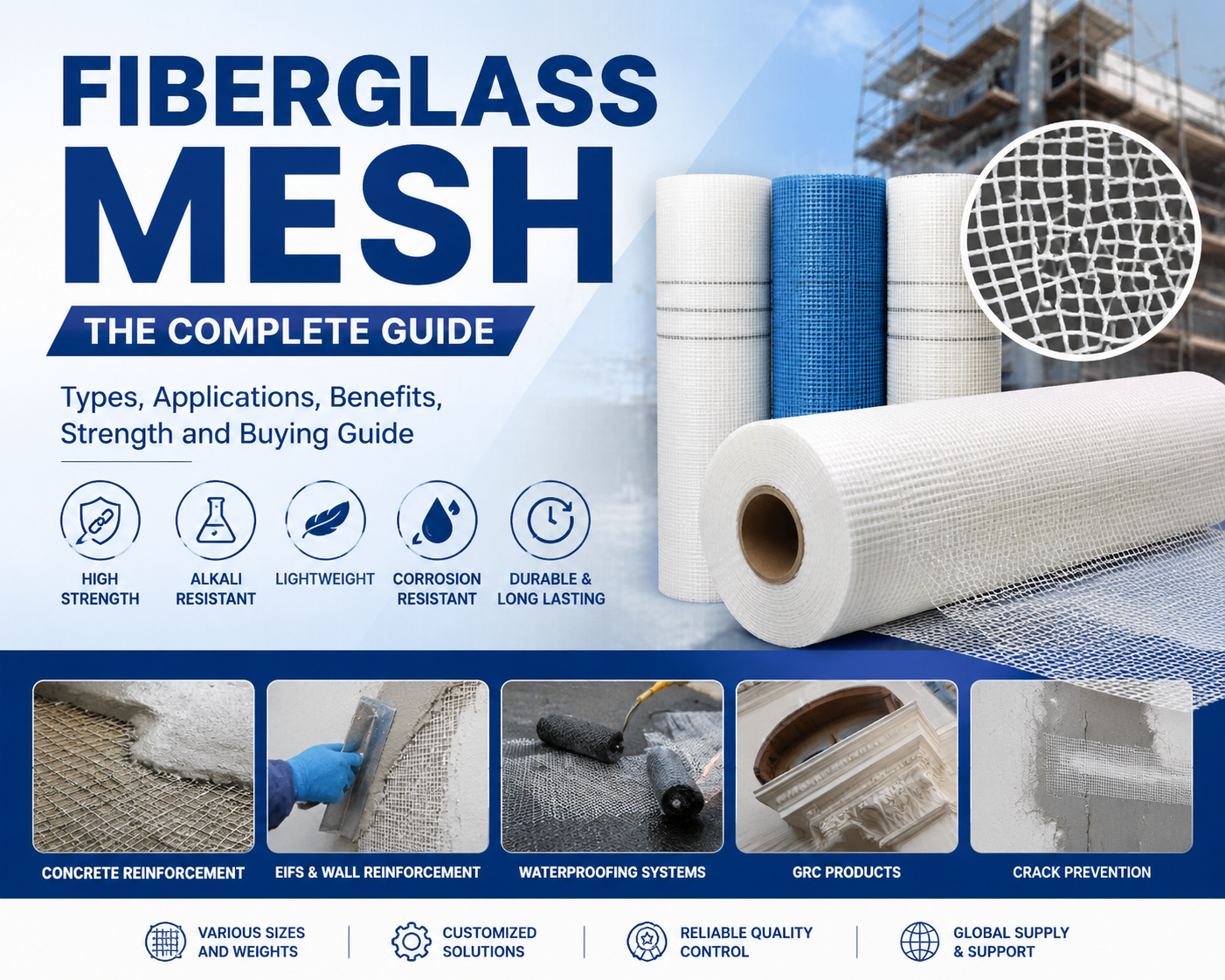
Because of its excellent reinforcement properties, fiberglass mesh is widely used in:
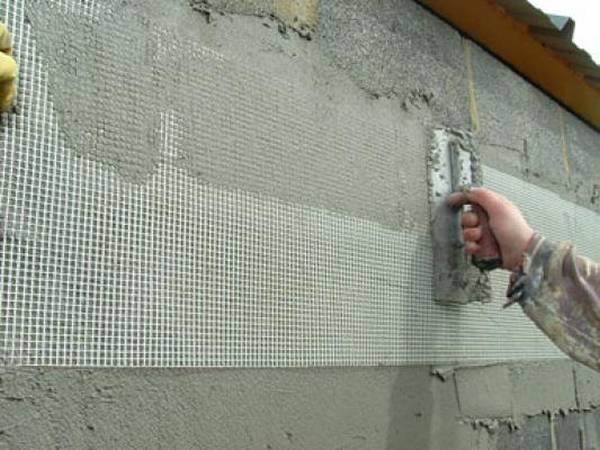
Exterior wall insulation systems (EIFS)
Concrete reinforcement
GRC products
Cement boards
Plaster reinforcement
Waterproofing systems
Different applications require different fiberglass mesh specifications.
2. Understanding Fiberglass Mesh Specification
When purchasing fiberglass mesh, buyers should pay attention to several key specifications.
2.1 Fiberglass Mesh GSM Weight
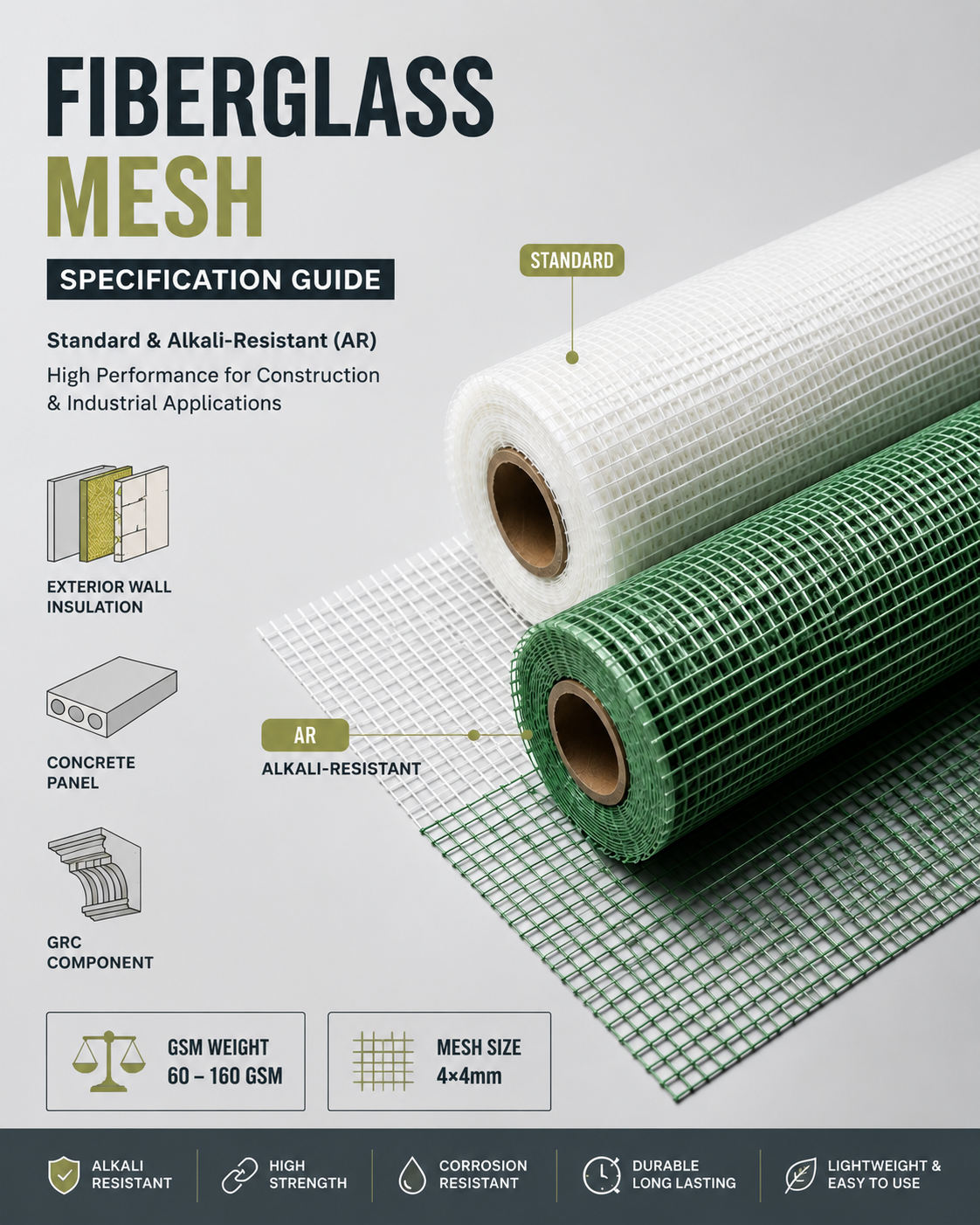
GSM means grams per square meter and represents the weight and density of fiberglass mesh.
Generally:
Higher GSM provides stronger reinforcement
Lower GSM provides better flexibility and easier installation
Common fiberglass mesh GSM specifications:
GSM
Main Applications
45-75gsm
Light repair and surface reinforcement
100-130gsm
Plaster and wall reinforcement
145gsm
EIFS and exterior wall insulation
160gsm+
Heavy-duty construction reinforcement
However, higher GSM does not always mean better performance.
The correct GSM depends on:
Application requirements
Required strength
Installation conditions
Cost considerations
2.2 Fiberglass Mesh Opening Size
Mesh opening size affects bonding performance and reinforcement ability.
Common sizes include:
4×4mm
5×5mm
10×10mm
For example:
4×4mm mesh is commonly used for wall reinforcement and EIFS.
5×5mm mesh is widely used in general construction applications.
The correct mesh size helps ensure good penetration and bonding with construction materials.
2.3 Fiberglass Mesh Roll Size
Common fiberglass mesh roll specifications include:
Width: 1m
Length: 50m
Length: 100m
Manufacturers can also provide customized:
Width
Roll length
Packaging
2.4 Tensile Strength
Tensile strength is an important indicator of fiberglass mesh quality.
It determines how much pulling force the mesh can withstand before breaking.
Concrete, cement, and GRC materials contain alkaline substances. Ordinary fiberglass mesh may gradually lose strength when exposed to alkaline environments.
AR fiberglass mesh uses alkali-resistant coating technology to maintain long-term performance.
Advantages of Alkali Resistant Fiberglass Mesh
1. Excellent Alkali Resistance
AR fiberglass mesh can maintain strength in high-alkaline environments.
2. Better Crack Prevention
It helps reduce cracks caused by:
Concrete shrinkage
Temperature changes
Building movement
3. Longer Service Life
Compared with standard fiberglass mesh, AR mesh provides better durability in cement-based applications.
Applications of AR Fiberglass Mesh
Common applications include:
Concrete reinforcement
GRC products
Cement boards
Exterior insulation systems
Precast concrete components
For concrete and cement-related projects, alkali resistant fiberglass mesh is usually the preferred choice.
For exterior wall insulation, 145gsm and 160gsm fiberglass mesh are commonly selected because they offer a good balance between strength and flexibility.
Working with an experienced fiberglass mesh supplier ensures stable quality, customized solutions, and reliable supply for construction projects.
FAQ
What is fiberglass mesh used for?
Fiberglass mesh is used for reinforcement in construction applications including concrete, EIFS, plaster, cement boards, and waterproofing systems.
What are the main fiberglass mesh specifications?
The main specifications include:
GSM weight
Mesh opening size
Roll size
Tensile strength
Coating type
Why use alkali resistant fiberglass mesh for concrete?
Because concrete and cement contain alkaline substances, AR fiberglass mesh provides better durability and maintains strength over time.
What fiberglass mesh is suitable for exterior walls?
145gsm and 160gsm fiberglass mesh are commonly used for exterior wall insulation systems because they provide good reinforcement and crack resistance.
How do I choose a fiberglass mesh supplier?
Choose suppliers with:
Manufacturing experience
Quality certifications
Customization capability
Stable production capacity
Export experience
Nicole
If you have any questions
Please contact us for free consultation and product quotation
Newsletter
Subscribe to our Newsletter & Event right now to be updated.
We noticed that you are interested in our fiberglass, but may need more information to make a decision. You can fill in the following form to get our professional consulting services.
Contact Us
We noticed that you are interested in our fiberglass, but may need more information to make a decision. You can fill in the following form to get our professional consulting services.