
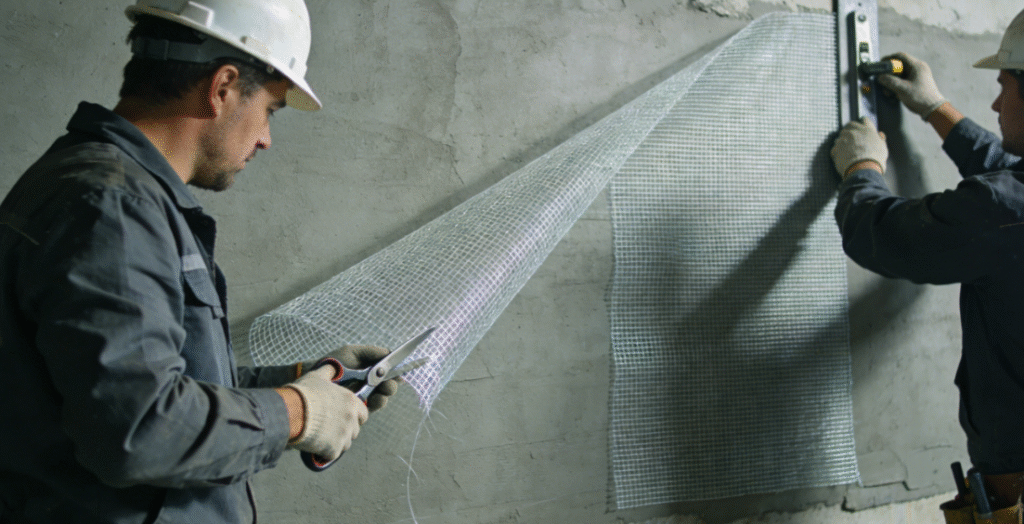
Foreword: What You Really Care About Isn't the Fabric, But the Money and the Deadline
As a project manager, renovation project manager, procurement officer, or on-site construction manager, you face this dilemma daily: for the same workload, others use less material, have a shorter construction period, and less rework; while on your side, fiberglass mesh scraps pile up, worker efficiency is low, and milestones are delayed, with profits quietly being eaten away by waste and inefficiency.
Many people mistakenly believe that high waste is due to poor worker skills, slow construction is due to insufficient manpower, and that buying cheaper fiberglass mesh will solve the problem. The truth is quite the opposite: high cutting losses are 90% not due to manual errors, but rather to mismatched processes, tools, layout, and material selection; long construction times are 70% not due to manpower shortages, but rather to non-standard processes, sequences, overlaps, and joint handling.
This article will thoroughly explain and implement the process from material selection to measurement, layout, cutting, on-site construction, and management optimization. By getting the details right, reducing the loss rate from 15%–20% to below 5% and improving construction efficiency by 30%–50% is achievable for every project.
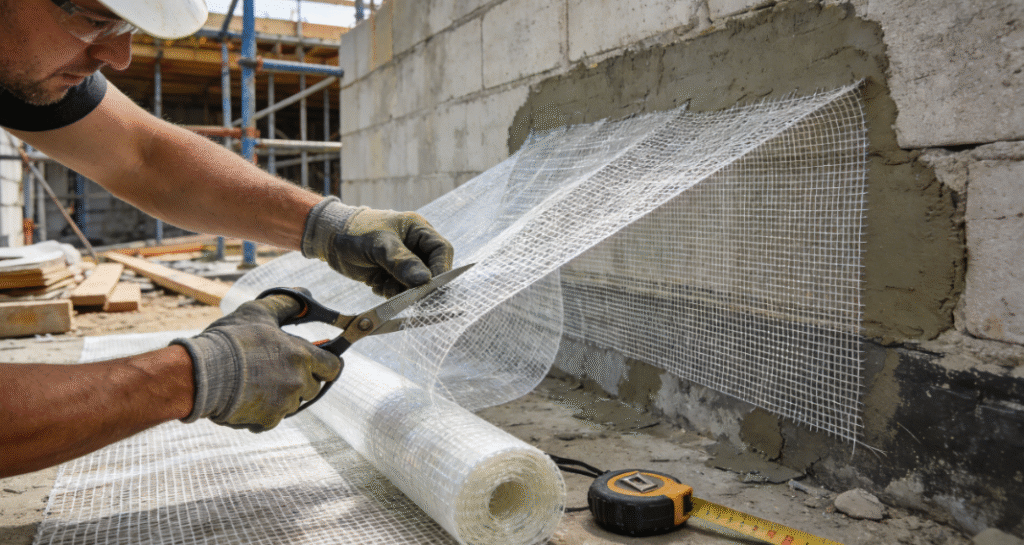
Let's do the math: the money you're "throwing away" every day
Let’s set aside the technical aspects for now and focus on what you care about most—the loss of fiberglass mesh fabric is never as simple as “wasting a piece of fabric.” It represents a significant loss of profit, along with the chain reaction of losses caused by project delays.
Taking a medium-sized project as an example (reflecting the actual working conditions of most clients):
- Fiberglass mesh usage: 10,000 ㎡
- Unit price: $1.0/㎡
- Industry average wastage: 15%
- Waste cost: 10,000 × 15% × 1.0 = $1,500
If the wastage is reduced to 5% (easily achievable after optimization):
- Fiberglass mesh savings: 1,000 ㎡
- Direct material cost savings: $1,000 (equivalent to an extra $1,000 in net profit)
- Reduced cutting, handling, and cleaning time: 2–3 man-days (at $100/man-day, saving an additional $200–300)
- Reduced rework, hollow areas, and crack repairs: Improper fiberglass mesh installation can easily lead to wall cracks, requiring re-plastering and re-applying, which is time-consuming and material-intensive.
Furthermore, consider the difference in construction time, which directly determines… Ensuring on-time project delivery and avoiding breaches of contract:
- Traditional manual construction (unoptimized): Laying 100㎡ of fiberglass mesh takes approximately 0.8–1.2 hours.
- Optimized construction (standardized process + suitable tools): Time can be reduced to 0.4–0.6 hours per 100㎡.
That is to say, laying 10,000㎡ of fiberglass mesh using traditional methods takes 80–120 hours, while using optimized methods only takes 40–60 hours, directly doubling efficiency. This process can be completed 1–2 days earlier, saving time for subsequent processes and avoiding penalties for delays.
For clients, general contractors, decoration companies, and construction teams, the logic is simple: less fiberglass mesh = higher profits; faster construction speed = stable milestones; less rework = better reputation; smooth management = lower risk. More and more mature projects have made fiberglass mesh wastage rate and construction efficiency core KPIs for refined management.
Where does wastage come from? 80% of waste occurs in these 3 places.
The fiberglass mesh scraps you see on-site represent a fixed waste path. By plugging these three loopholes, waste can be immediately reduced, eliminating reliance on worker skill levels and achieving standardized material savings through streamlined processes.
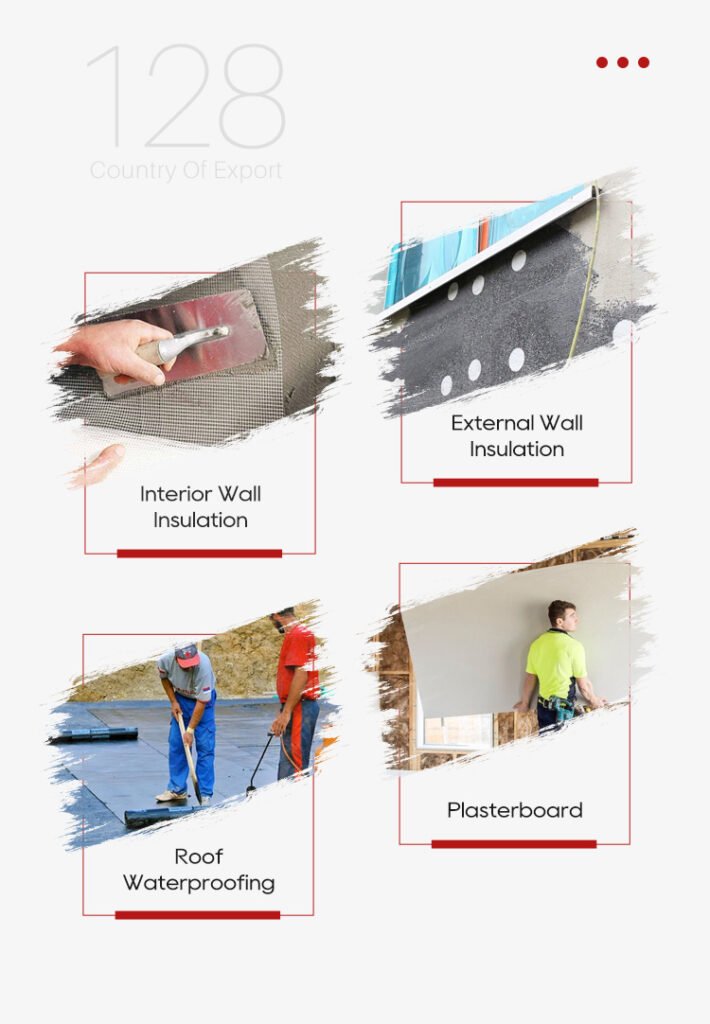
Size based on experience, no layout or pre-planning (40% waste)
Many construction sites have the habit of workers receiving fiberglass mesh without checking wall dimensions or calculating modules, cutting and trimming haphazardly. Large areas use whole pieces, while small areas are randomly pieced together, entirely based on intuition.
For example: a wall 2.8 meters high with 1-meter-wide fiberglass mesh, a worker might cut 3 meters, leaving only 0.2 meters of scrap that’s too short to use and must be discarded. This also leads to improper overlaps and excessive splicing, resulting in further waste of materials and labor during rework.
Results: 1. Small scraps piled up, wasting large pieces of material; extremely low utilization rate of fiberglass mesh; reusable scraps were disposed of as waste due to messy cutting.
Incorrect tools, wasting one sheet per cut (25% waste)
Cutting fiberglass mesh doesn’t require sophisticated tools, but choosing the wrong tools means wasting one sheet per cut. Many contractors, to save time, use ordinary household scissors, dull blades, or low-quality utility knives.
Ordinary scissors cannot cut fiberglass fibers, easily resulting in rough, burr-like cuts, which can cause subsequent lifting and hollowing during installation; dull blades easily cause skewed cuts, and if the dimensional deviation exceeds 1cm, it cannot be used for large-area installation and must be scrapped and recut.
Result: Improper cutting leads to frequent scrapping of fiberglass mesh, resulting in a high wastage rate and affecting the quality of installation.
Incorrect Material Selection Leads to Increasing Waste (10% of Waste)
Many customers purchase fiberglass mesh only based on unit price, ignoring specifications and intended use, assuming “any fiberglass mesh will do.” However, choosing the wrong material is a huge waste.
Three common mistakes are:
- Using heavy-duty exterior mesh for interior walls: Interior walls don’t require high strength for crack prevention. Heavy mesh is difficult to cut, doesn’t adhere well, requires more adhesive, and may cause uneven plastering, increasing labor and procurement costs.
- Using lightweight interior mesh for exterior walls: Exterior walls require fiberglass mesh with high alkali resistance and tensile strength. Lightweight mesh is easily corroded by adhesive, ages, and breaks, leading to wall cracking and rework, repeatedly wasting materials and labor.
- Mismatch between weight, mesh size, and application conditions: Using overly dense mesh for thick plastered walls prevents adhesive penetration; using overly sparse mesh for thin plastered walls results in poor crack prevention, both easily leading to rework.
Results: Choosing the right fiberglass mesh reduces waste and improves efficiency; choosing the wrong one leads to a vicious cycle of “waste → rework → more waste.”
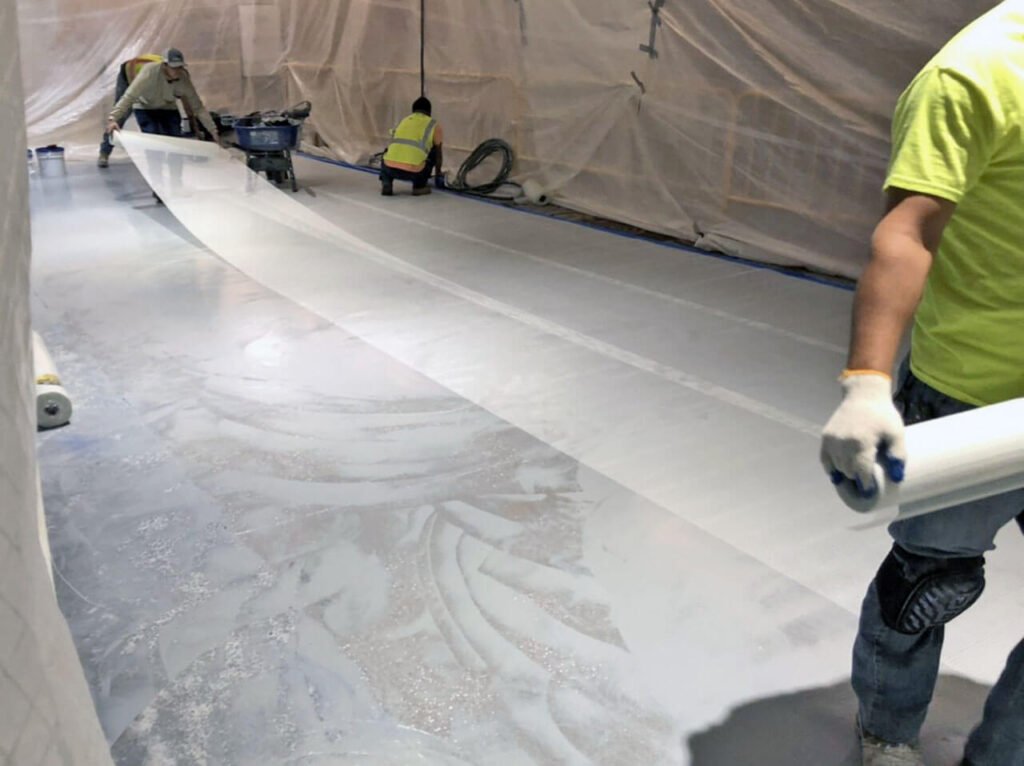
Core Solution: 4 Steps to "Save Materials + Speed Up," Immediate Results
Based on practical experience from thousands of construction sites, we have summarized a comprehensive optimization solution tailored to each client’s specific needs. This solution requires no additional costs or significant changes to worker operating habits; strict implementation leads to “reduced waste and increased efficiency.” Core Logic: Not relying on worker skills, but on “standardized processes + suitable tools + precise management” to maximize the value of every meter of fiberglass mesh.
Step 1: Material Selection and Matching – Choosing the Right Fiberglass Mesh Reduces Waste at the Source
Material selection is crucial. Many clients experience high waste and slow construction due to improper material selection. No need to memorize complex parameters; remember “3 matching points” to choose the right fiberglass mesh and avoid unnecessary expenses.
1. Application Matching: Separate Selection for Interior Walls, Exterior Walls, and Special Scenarios
Different scenarios require different fiberglass mesh fabrics. Purchasing and using them separately ensures quality and reduces waste:
Interior Wall Scenarios (Crack Prevention, Cable Tray Repair, etc.):Prioritize alkali-resistant fiberglass mesh fabric with a weight of 80–120 gsm and a mesh size of 5×5mm or 4×4mm. It is lightweight, easy to cut and install, and reasonably priced.
Exterior Wall Scenarios (Insulation Finishing, Plaster Crack Prevention):Prioritize alkali-resistant fiberglass mesh fabric with a weight of 160–200 gsm and a mesh size of 5×5mm (alkali-resistant coating is even better). It has good tensile and alkali resistance, reducing hidden waste from rework.
Special Scenarios (High Temperature, High Humidity, etc.):Select dedicated alkali-resistant and high-temperature resistant fiberglass mesh fabric to avoid cracking and detachment due to material incompatibility.
2. Specification Matching:Fits Wall Dimensions, Reducing Scrap Material
Standard Fiberglass Mesh Fabric Widths:1m, 1.2m; Lengths: 50m, 100m. 1. Measure the wall dimensions before purchasing and select the appropriate specifications: For example, for a wall height of 2.8m, prioritize 1m wide mesh fabric with a cut length of 2.8m, resulting in almost no scrap; for a wall height of 3m, choose 1.2m wide mesh fabric to reduce waste.
Step Two: Precise Measurement – Pre-measurement to Avoid "Experience-Based Cutting"
Precise measurement is the foundation for reducing waste. Workers can master the correct method in 5 minutes:
1. Sectional Measurement, Marking Details
Measure the paving area in sections, marking the dimensions of each section, especially special locations such as door and window openings and corners. Clearly mark the dimensions and shape for workers’ cutting reference.
2. Allow for Overlap Size to Avoid Secondary Cutting
The standard overlap width for fiberglass mesh is 5-10cm. Allow for this during measurement to avoid insufficient overlap due to calculating only the net dimensions, requiring recutting and splicing.
3. Standardized Measurement to Avoid Errors
Assign a dedicated person to measure using standardized tools (steel tape measure, laser rangefinder). Verify the measurements afterward to ensure accuracy and avoid cutting waste caused by dimensional errors.
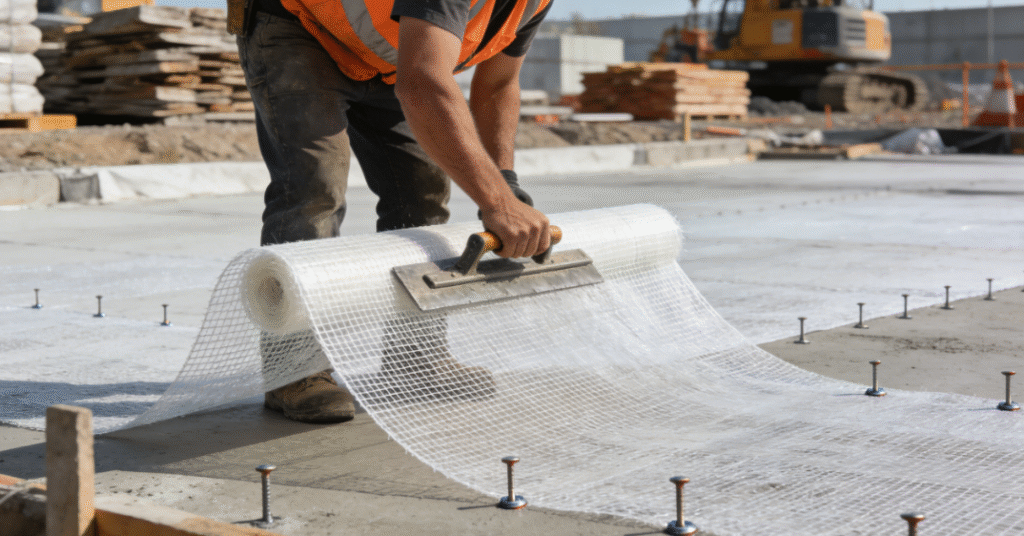
Step 3: Scientific Layout – Standardized Cutting to Ensure Every Meter of Fiberglass Mesh is Usable
Scientific layout is the core of reducing waste. It is divided into “large-area layout” and “special location layout,” and is simple and easy to operate:
1. Large-area layout: Whole-size first, then smaller pieces, maximizing the use of whole materials
Large areas are first covered with a whole sheet of fiberglass mesh. The cut scraps are categorized by size and reserved for smaller areas such as cable trays, door and window openings, avoiding wasting large pieces of material.
2. Choosing the right cutting tools for greater efficiency
Prioritize the use of dedicated fiberglass mesh cutting tools: dedicated utility knives (sharp blades, not easily dulled) and mesh cutting machines (suitable for large-volume cutting, precise dimensions, and high efficiency). Avoid using ordinary scissors and dull blades. Dedicated tools ensure clean cuts, no fraying, and precise dimensions, reducing waste.
Step 4: On-site Management + Construction Optimization – Speeding Up and Reducing Waste, Minimizing Hidden Waste
Improved on-site management and construction optimization can reduce repetitive cutting, increase construction efficiency, and reduce hidden waste:
1. Standardize On-site Management to Reduce Repetitive Cutting
Set up a dedicated cutting area to avoid contaminating the fiberglass mesh during cutting;
Classify and label the mesh of different specifications and uses for easy worker access;
Classify scraps by size and clearly label them for easy reuse.
2. Optimize Construction Process to Improve Efficiency
Arrange the construction sequence reasonably: handle special locations such as door and window openings and corners first, then lay the larger areas to avoid rework caused by overlapping construction;
Standardize overlapping operations: strictly adhere to an overlap width of 5-10cm to avoid excessive overlap leading to material waste or insufficient overlap leading to cracking.
Customer Case: From 18% Waste to 4%, How Much Money Did Aiswix Save?
A decoration company undertook a 100,000㎡ residential project. Initially, the fiberglass mesh wastage rate reached 18%, resulting in low construction efficiency and delays. Aiswix, combining the above solutions and optimizing four aspects—material selection, layout, cutting, and management—demonstrated significant results in just one week: The wastage rate decreased from 18% to 4%, saving 14,000 square meters of mesh fabric on 100,000 square meters, which translates to a direct material saving of $14,000 at $1.00 per square meter; Construction efficiency increased by 40%, reducing the laying time per 100 square meters from 1.1 hours to 0.66 hours, completing the entire project three days ahead of schedule and avoiding late payment penalties; The rework rate decreased from 12% to 1%, reducing repair labor and material costs by approximately $2,000, resulting in cumulative cost savings exceeding $10,000.
This case demonstrates that reducing fiberglass mesh cutting waste and shortening construction time does not require complex technology. By focusing on the five core elements—”appropriate material selection, accurate measurement, scientific layout, standardized cutting, and meticulous management”—the goals of saving materials, accelerating progress, and ensuring quality can be achieved.
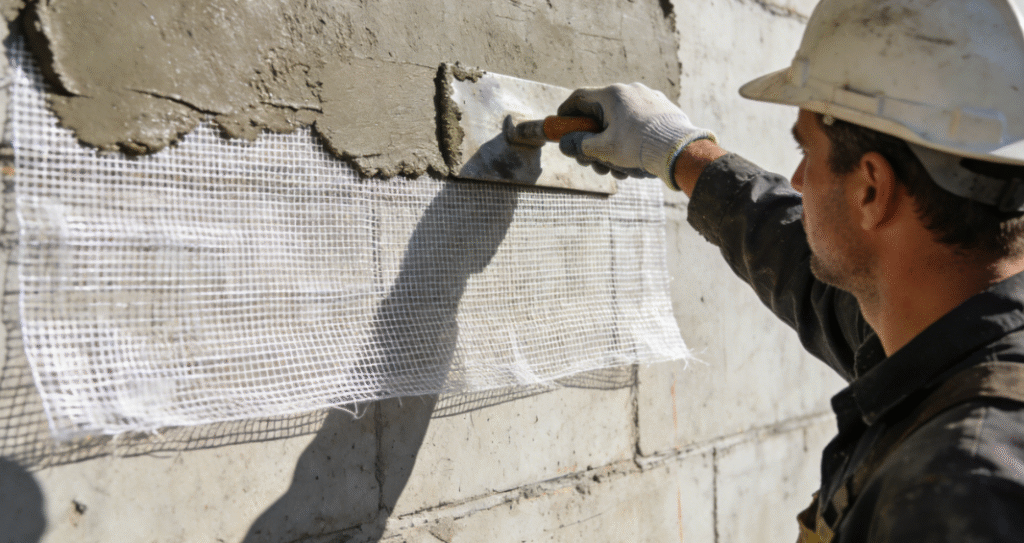
Conclusion: Small Consumables, Big Profits – Refined Management is Key
To summarize the key points: reducing fiberglass mesh cutting waste hinges on “precision”—precise material selection, precise measurement, precise layout, and precise cutting; shortening construction time hinges on “standardization”—standardized tools, standardized processes, and standardized management.
Without adding manpower or extra money, simply implementing the above methods can reduce fiberglass mesh wastage to below 5%, increase construction efficiency by over 30%, maximize the value of every meter of fiberglass mesh, maximize project profits, and make the project schedule more controllable.
If you encounter difficulties in selecting or installing fiberglass mesh and need targeted solutions, please contact us at any time. We will provide free technical guidance based on your project conditions to help you save materials, speed up the process, and reduce costs.