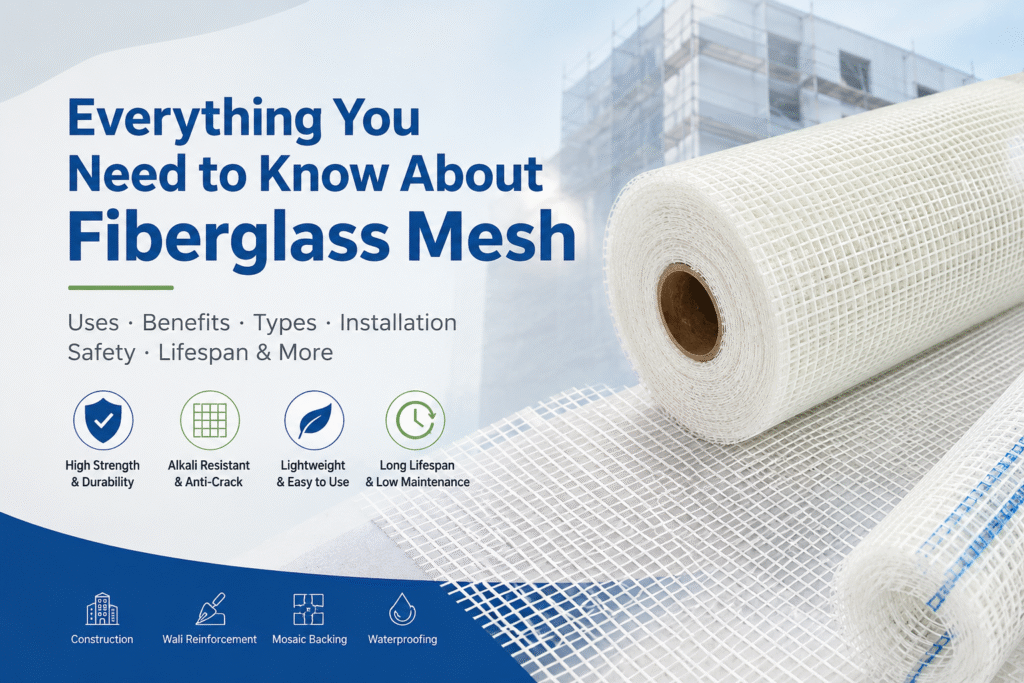
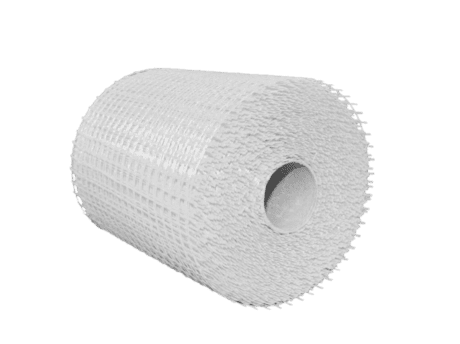
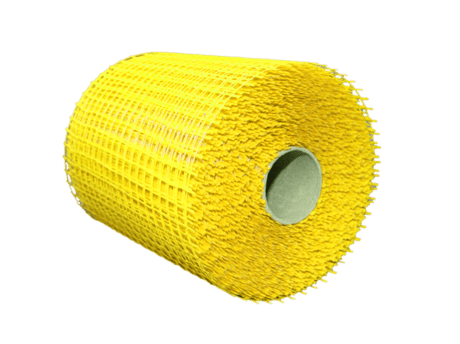
Fiberglass mesh has become one of the most widely used reinforcement materials in modern construction, waterproofing, wall reinforcement, composite manufacturing, and industrial applications. Thanks to its excellent tensile strength, corrosion resistance, lightweight structure, and long service life, fiberglass mesh is an ideal solution for both residential and commercial projects.
In this guide, we’ll answer the most frequently searched questions and help you choose the right fiberglass mesh for your project.
What Is Fiberglass Mesh?
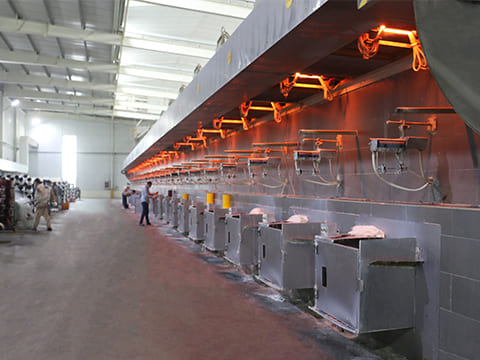
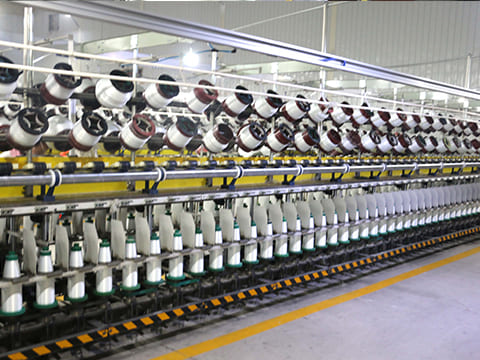
Fiberglass mesh is a woven fabric made from continuous fiberglass yarns coated with an alkali-resistant polymer. The coating protects the glass fibers from degradation caused by cement and alkaline environments.
Compared with ordinary reinforcement materials, fiberglass mesh offers:
High tensile strength
Lightweight construction
Excellent alkali resistance
Corrosion resistance
Crack prevention
Long service life
Easy installation
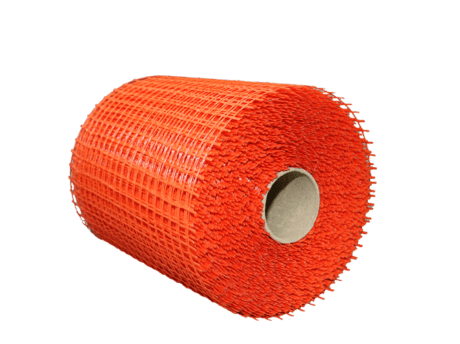
It is available in different weights, mesh sizes, colors, and coatings depending on the application.
What Is Fiberglass Mesh Used For?
Fiberglass mesh has a wide range of industrial and construction applications.
1. Wall Reinforcement
One of the most common uses is reinforcing plaster and render systems. It helps prevent wall cracking caused by thermal expansion and structural movement.
2. Exterior Insulation Finishing Systems (EIFS)
Fiberglass mesh improves the impact resistance and durability of exterior insulation systems.
3. Waterproofing Systems
Many waterproof membranes use fiberglass mesh to increase tensile strength.
4. Roofing Applications
Roof reinforcement prevents cracking and extends roof lifespan.
5. Stone and Marble Backing
Natural stone slabs often use fiberglass mesh backing to improve transportation safety.
6. Drywall Joint Reinforcement
Self-adhesive fiberglass mesh tape is commonly used for drywall joints and crack repairs.
7. Composite Manufacturing
Fiberglass mesh is widely used in FRP products and composite laminates.
Fiberglass Mesh for Concrete
Concrete naturally shrinks during curing and may develop cracks over time.
For cement-based applications, always choose alkali resistant fiberglass mesh, as ordinary fiberglass can deteriorate in highly alkaline environments.
Fiberglass mesh is known for its exceptional tensile strength, making it a reliable choice for reinforcement purposes.
It offers flexibility without compromising its durability, allowing it to adapt to different shapes and surfaces.
Alkali Resistant Fiberglass Mesh
Alkali-resistant (AR) fiberglass mesh is specially coated to withstand the alkaline chemicals found in cement and mortar.
Benefits include:
Excellent chemical resistance
Superior durability
High tensile strength
Long service life
Better bonding with mortar
AR mesh is recommended for:
EIFS
Cement boards
Wall rendering
Concrete reinforcement
Waterproof mortar
Tile backing
Fiberglass Mesh for Epoxy
Fiberglass mesh is also compatible with epoxy resin systems.
It is widely used in:
Boat building
FRP manufacturing
Carbon fiber repair
Surfboards
Composite panels
Industrial flooring
When embedded into epoxy resin, fiberglass mesh creates lightweight yet extremely strong composite structures.
Benefits include:
Better impact resistance
Improved structural strength
Lightweight reinforcement
Easy lamination
This type of fiberglass mesh has a finer weave and is used in applications that require a smoother surface, such as wall repair or as a backing for decorative veneer.
Fiberglass Mesh Tape
Fiberglass mesh tape is a self-adhesive reinforcement tape primarily used for drywall finishing.
Advantages include:
Easy installation
Strong adhesion
Crack prevention
Smooth finishing
No paper tape required
Applications:
Drywall joints
Ceiling repairs
Crack repairs
Corner reinforcement
How Long Does Fiberglass Screen Mesh Last?
The lifespan depends on environmental conditions and product quality.
Typical service life:
Application
Expected Lifespan
Indoor drywall
20–30 years
Exterior EIFS
25–50 years
Concrete reinforcement
30–50 years
Waterproofing
20–30 years
Roofing
20–40 years
Premium alkali-resistant fiberglass mesh can maintain its strength for decades when properly installed.
Is Fiberglass Just as Bad as Asbestos?
No.
Fiberglass and asbestos are entirely different materials.
Fiberglass
Asbestos
Manufactured glass fibers
Naturally occurring mineral
Non-carcinogenic under normal use
Known human carcinogen
Safe when handled correctly
Highly hazardous
Widely used worldwide
Banned or restricted in many countries
While fiberglass dust may temporarily irritate the skin, eyes, or respiratory tract during cutting or installation, it does not carry the same health risks associated with asbestos. Wearing gloves, long sleeves, eye protection, and a dust mask is generally recommended when handling fiberglass materials.
Is Fiberglass Mesh Safe to Use?
Yes.
Fiberglass mesh is considered safe when installed properly.
Safety recommendations:
Wear gloves
Wear safety glasses
Use a dust mask while cutting
Store in dry conditions
Avoid prolonged skin contact with loose fibers
After installation, fiberglass mesh becomes encapsulated in mortar or resin, making it completely safe for normal use.
How Many Layers of Fiberglass Cloth Should I Use?
The required number of layers depends on the application.
General recommendations:
Application
Recommended Layers
Wall repair
1
Waterproofing
1–2
FRP products
2–5
Boat building
4–8
Heavy structural reinforcement
6–12
Always follow the engineering specifications for load-bearing or structural applications.
How Do You Install Fiberglass Mesh?
Installing fiberglass mesh is straightforward when following the correct process.
Step 1
Prepare the surface by removing dust, grease, and loose particles.
Step 2
Apply a layer of mortar or adhesive.
Step 3
Embed the fiberglass mesh into the wet mortar.
Step 4
Use a trowel to smooth out wrinkles and air bubbles.
Step 5
Overlap adjacent mesh sheets by approximately 100 mm (4 inches).
Step 6
Apply a second coat of mortar to completely cover the mesh.
Step 7
Allow sufficient curing time before finishing.
How to Choose the Right Fiberglass Mesh Roll
Before purchasing, consider the following factors:
Mesh size
Weight (g/m²)
Alkali resistance
Coating quality
Tensile strength
Roll dimensions
Intended application
Compliance with industry standards
Manufacturer experience
Selecting the appropriate Fiberglass Mesh Roll ensures better performance and long-term durability for your project.
For many non-structural applications such as plastering, EIFS, waterproofing, and crack prevention, fiberglass mesh is an effective lightweight alternative. Structural reinforcement still requires engineering evaluation.
Can fiberglass mesh be used outdoors?
Yes. Alkali-resistant fiberglass mesh is designed to withstand outdoor weather, moisture, and UV exposure when embedded correctly.
Is fiberglass mesh waterproof?
The mesh itself is not a waterproof membrane, but it is commonly used to reinforce waterproofing systems and improve their durability.
What is the standard roll size?
Common roll sizes include 1 m × 50 m, 1 m × 100 m, and custom dimensions based on project requirements.
In Conclusion
Fiberglass mesh is a versatile reinforcement material that combines strength, durability, and ease of installation. Whether you’re reinforcing concrete, repairing drywall, waterproofing a structure, or manufacturing FRP composites, choosing the right fiberglass mesh can significantly improve performance and longevity.
We noticed that you are interested in our fiberglass, but may need more information to make a decision. You can fill in the following form to get our professional consulting services.
Contact Us
We noticed that you are interested in our fiberglass, but may need more information to make a decision. You can fill in the following form to get our professional consulting services.