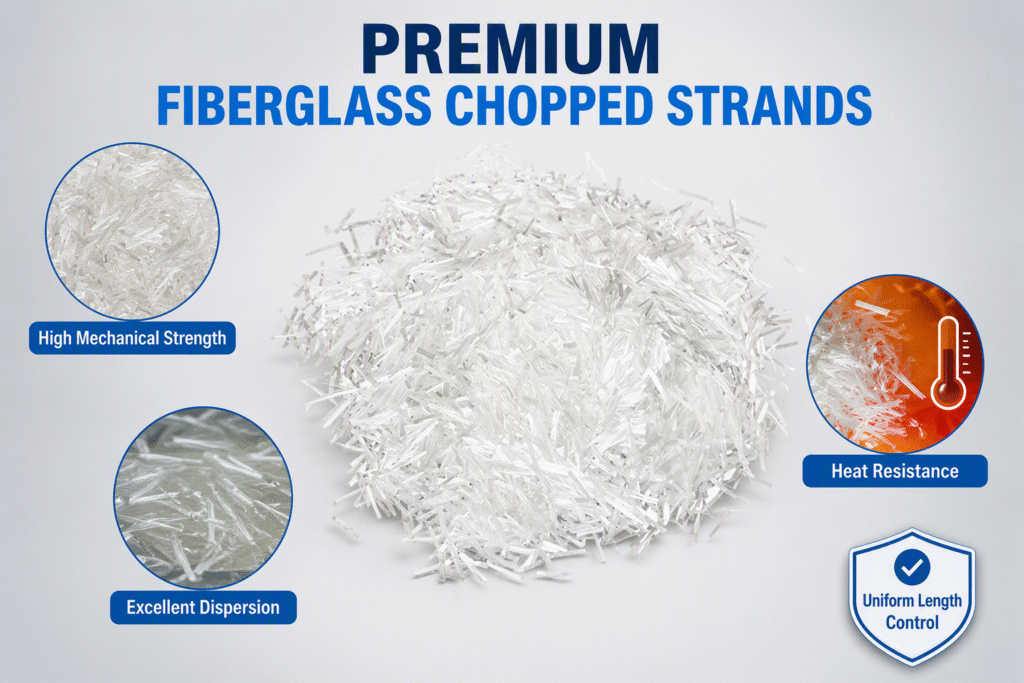
Introduction: Why Are More Manufacturers Turning to Fiberglass Chopped Strands?
Recently, our sales and technical teams have noticed a growing trend among customers worldwide. More and more manufacturers are asking similar questions:“Can fiberglass chopped strands replace traditional reinforcement materials in our concrete products?”“Which fiberglass type is suitable for GRC panels and cement boards?”These questions reflect a major transformation in the construction and composite materials industries. Manufacturers are searching for lighter, stronger, and more durable reinforcement solutions.Fiberglass chopped strands have become one of the most effective materials for improving crack resistance, durability, and mechanical performance in cement-based products and composite materials.In this guide, we will explore the technical factors, application differences, and purchasing considerations of fiberglass chopped strands, helping you select the ideal reinforcement solution.
The Science of Reinforcement: How Fiberglass Chopped Strands Improve Material Performance
To understand the value of fiberglass chopped strands, we first need to understand the weakness of traditional materials.Concrete and cement products have excellent compressive strength but limited tensile strength. Under shrinkage, temperature changes, or external stress, small cracks can easily appear and gradually expand.Fiberglass chopped strands solve this problem by creating a three-dimensional reinforcement network inside the material.When mixed with concrete, cement, or resin, each fiber works as a tiny reinforcement element. It distributes stress, controls crack growth, and improves overall durability.This process is known as fiber bridging reinforcement.
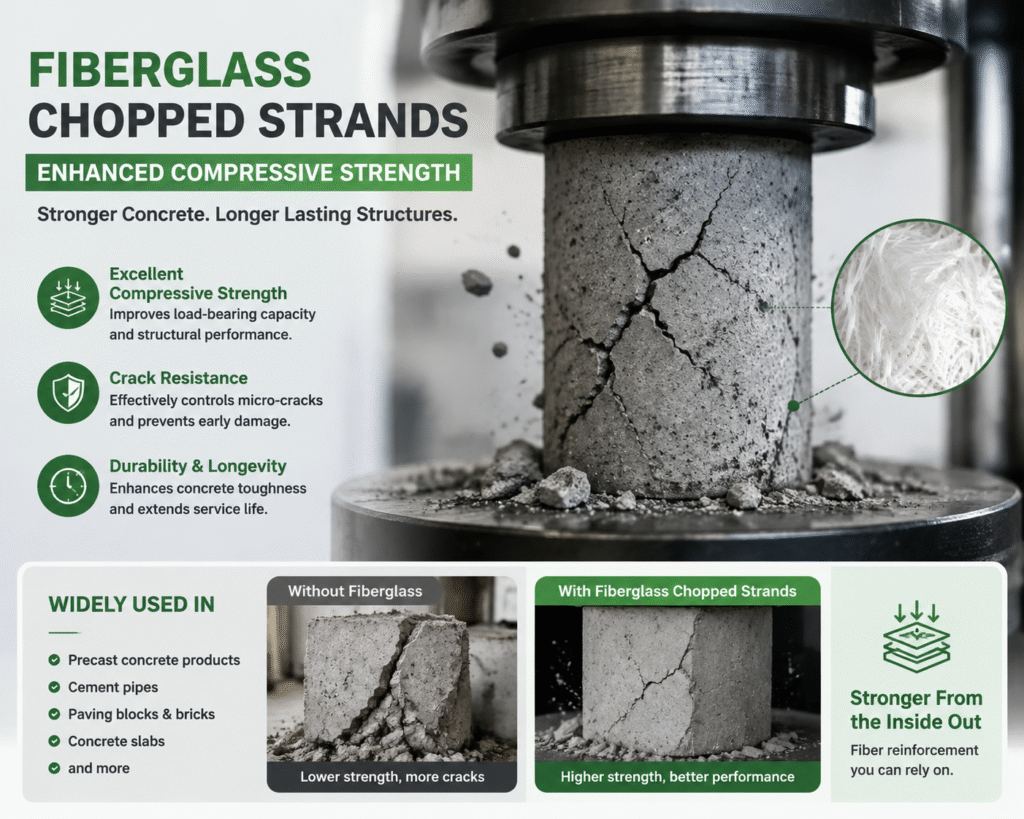
AR Fiberglass Chopped Strands: The Key Solution for Cement Applications
Not all fiberglass is suitable for cement-based products.
Because cement creates a highly alkaline environment, ordinary fiberglass may lose strength over time.
This is why professional manufacturers choose Alkali Resistant Fiberglass Chopped Strands (AR Glass Fiber).
AR fiberglass contains zirconia components that improve resistance against alkaline corrosion.
It is widely used in:
GRC panels
Cement boards
Precast concrete products
Mortar reinforcement
Construction repair materials
For manufacturers producing long-life building materials, AR fiberglass chopped strands are not just an additive—they are a performance guarantee.
Fiber Length and Surface Treatment: The Two Factors That Decide Performance
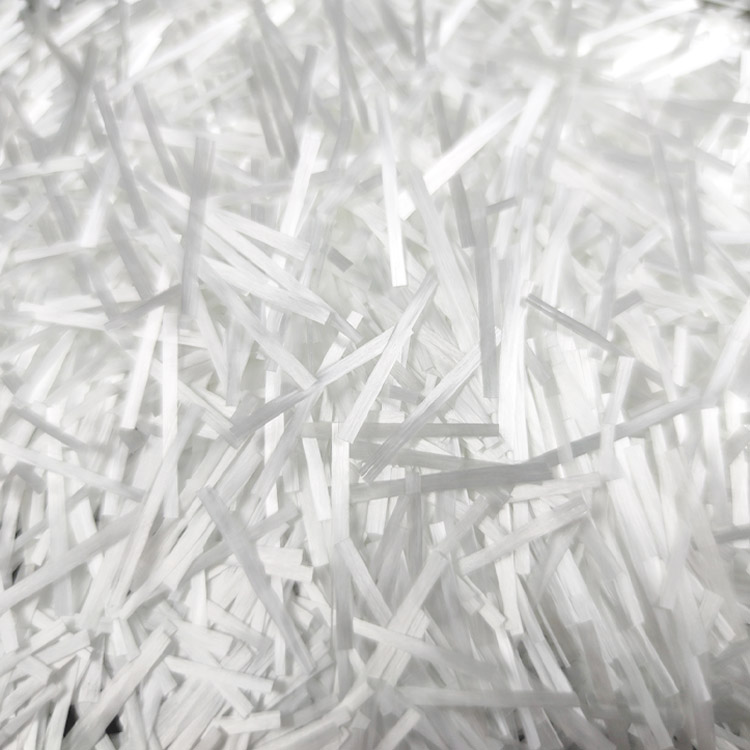
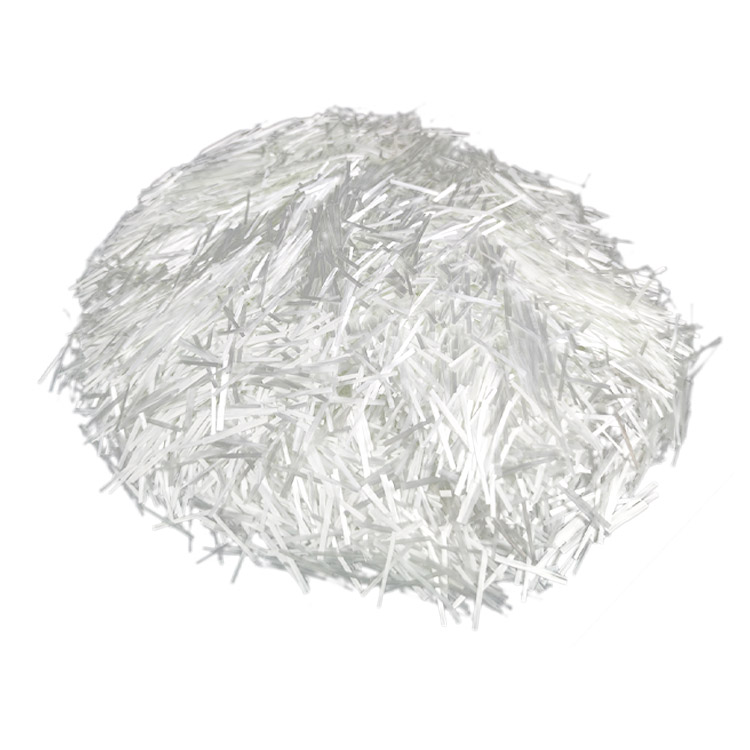
Choosing fiberglass chopped strands is not only about price. Fiber specifications directly influence final product performance.
1. Fiber Length
Different applications require different fiber lengths.
Common options include:
3mm–6mm: Better dispersion for mortar and small products
6mm–12mm: Ideal for GRC panels and cement boards
12mm–24mm: Stronger reinforcement for heavy-duty applications
Choosing the correct fiber length ensures better mixing, stronger bonding, and improved crack resistance.
2. Surface Treatment (Sizing)
The sizing coating on fiberglass plays a critical role in fiber performance.
High-quality sizing improves:
Fiber dispersion
Fiber-matrix bonding
Processing stability
Product consistency
A professional fiberglass chopped strand supplier should provide suitable sizing solutions according to different applications.
Market Trends: The Growing Demand for Lightweight Reinforced Materials
The construction industry is moving toward lightweight, durable, and sustainable materials.
Compared with traditional steel reinforcement, fiberglass provides:
Lower weight
Better corrosion resistance
Easier processing
Longer service life
This is why more manufacturers are adopting fiberglass chopped strands for modern construction products.
For wholesalers and distributors, working with a reliable fiberglass chopped strand supplier also helps achieve:
Stable supply
Competitive factory pricing
Customized specifications
Technical support
Quality and Purchasing Considerations for Bulk Buyers
Before purchasing fiberglass chopped strands, buyers should check:
Raw Material Quality
Stable glass composition ensures consistent strength.
Technical Parameters
Important factors include:
Fiber length
Filament diameter
Moisture content
Combustible content
Packaging quality
Production Capability
A reliable supplier should have:
Stable production lines
Quality inspection system
International export experience
Conclusion: Fiberglass Chopped Strands Create Stronger and More Durable Products
So, is fiberglass chopped strand a suitable reinforcement solution?
The answer is yes—when the correct fiber type, length, and surface treatment are selected.
For GRC manufacturers, cement board producers, concrete factories, and composite material companies, fiberglass chopped strands provide a reliable way to improve strength, reduce weight, and extend product life.
By partnering with an experienced fiberglass chopped strand supplier, companies can achieve better production efficiency, stable quality, and stronger market competitiveness.
Fiberglass reinforcement is not only a material choice—it is a smarter solution for the future of construction and composite manufacturing.