Introduce
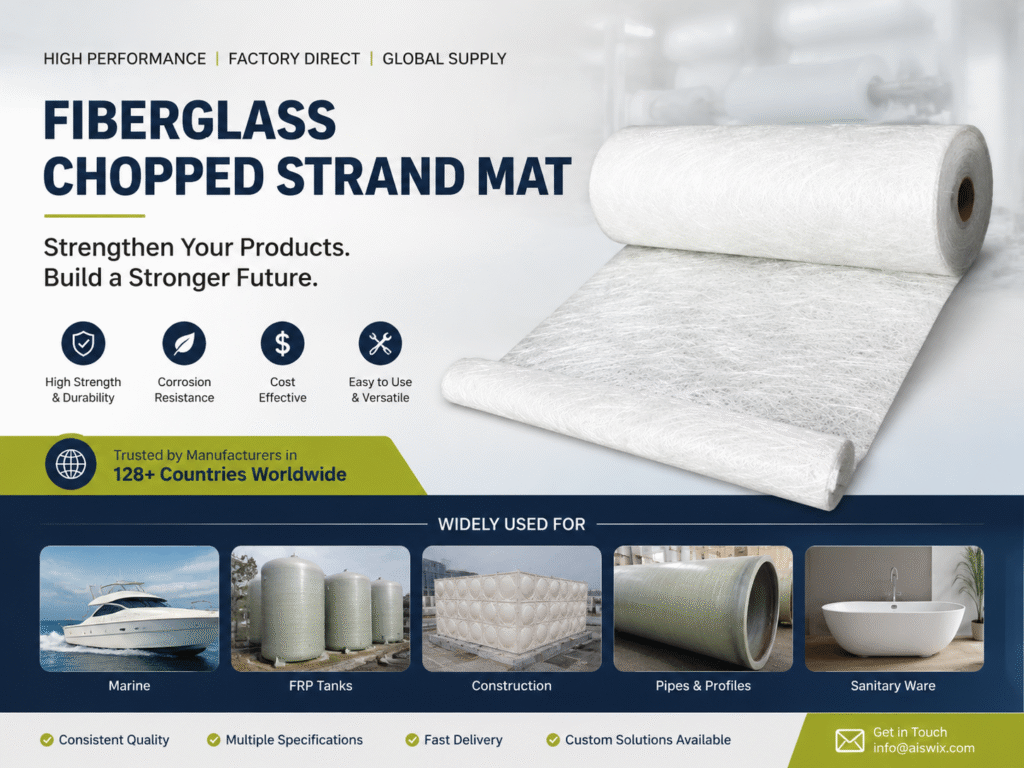
In the world of high-performance composites, the most expensive failures are often the ones you can’t see. Whether it’s a yacht hull battling the ocean or a chemical tank holding tons of corrosive acid, the choice of Fiberglass Mat—specifically Chopped Strand Mat (CSM)—is not just a material spec; it’s a survival strategy. Much like the choice between printing methods determines a bottle’s shelf life, the quality of your mat determines whether your structure is a monument to engineering or a ticking time bomb of delamination.
Random Architecture: How Fiberglass Mats are Made
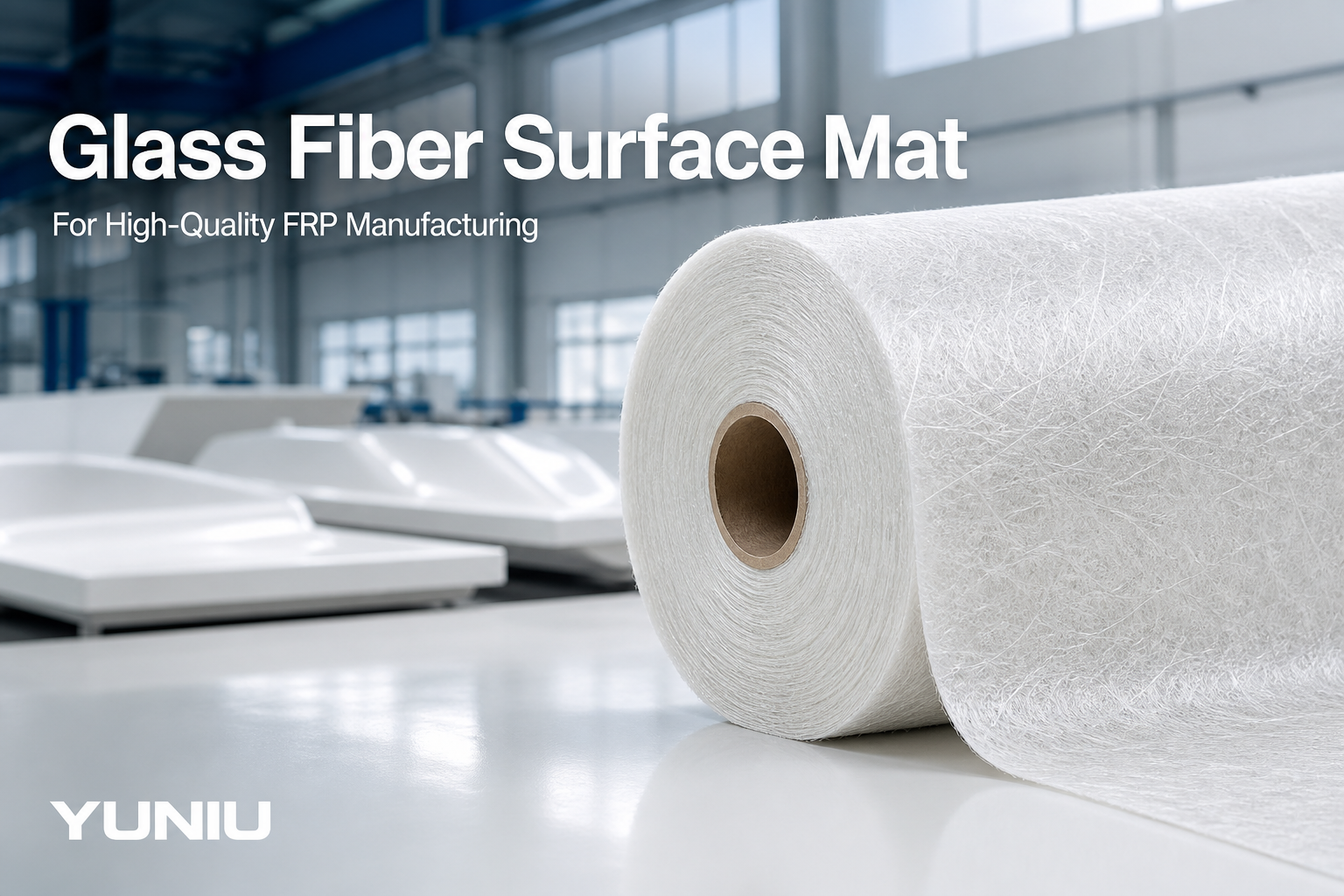
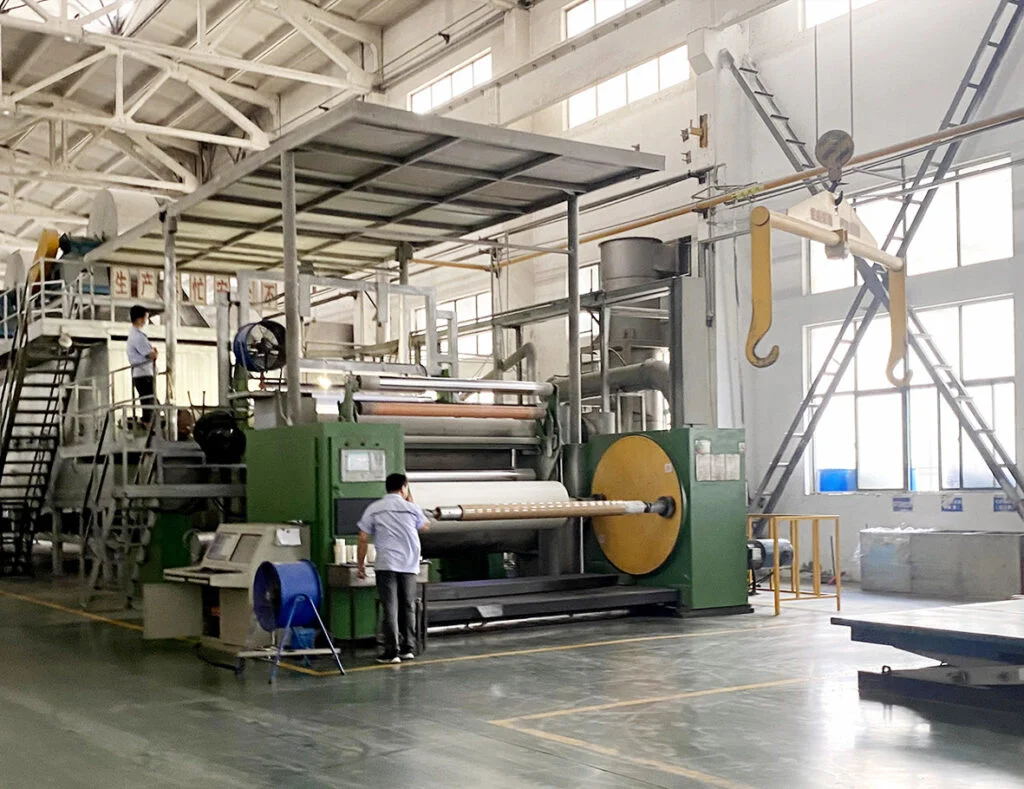
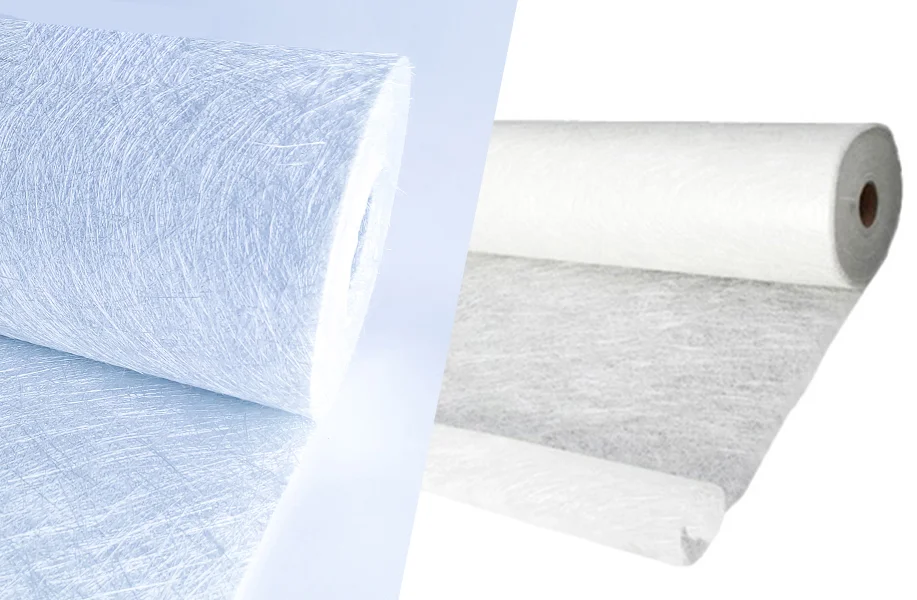
Understanding the “soul” of fiberglass mat starts with the machine. Unlike woven cloth that follows a predictable grid, Chopped Strand Mat (CSM) is an exercise in controlled chaos.
The Process : Industrial rovings are fed into high-speed cutters that chop them into precise segments (typically 25mm to 50mm). These short fibers are then “rained” down onto a moving conveyor in a completely random orientation. To transform this loose pile into a usable roll, a chemical binder (either a powder or an emulsion) is applied before the mat passes through a massive curing oven.
At Aiswix, we believe this randomness is the secret to isotrophy—ensuring your product has equal strength from every single angle, preventing weak points that lead to structural failure.
The "Chemical Handshake": Finding the Perfect Resin Partner
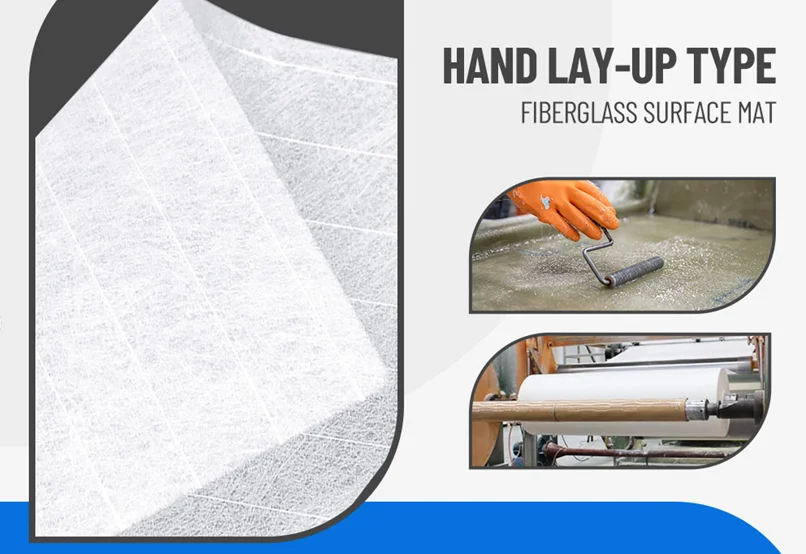
A fiberglass mat is only as good as its bond. Many projects fail because of a “bad handshake” between the mat and the resin. The choice of resin is dictated by the binder that holds the fibers together.
Polyester & Vinyl Ester Resins : These are the “Gold Standard” for standard CSM. These resins contain styrene, which dissolves the chemical binder in the mat. This allows the fibers to become soft, conform to complex curves, and fully integrate into the structure.
The Epoxy Dilemma : Standard mats often struggle with epoxy because it cannot dissolve the binder, leading to poor adhesion. However, Aiswix has engineered specialized powder-bound mats designed specifically for high-strength epoxy projects, ensuring a permanent bond where failure is not an option.
The Battle Against Time: Curing and Degradation
How long does it take for fiberglass to reach its peak strength? And more importantly, does it degrade?
How long does it take for fiberglass cloth to cure? Initial hardening occurs within 2 to 4 hours, but a full structural cure—where the molecular cross-linking reaches its maximum—typically takes 24 to 72 hours. Testing or stressing a part before this window is complete is a primary cause of premature failure.
Does fiberglass degrade over time? In a vacuum, no. In the real world, yes—but only if the boundary is breached. With proper sealing, an Aiswix-reinforced structure can last 50+ years. Degradation usually occurs due to hydrolysis (water seeping into the resin) or UV-induced brittleness.
Fighting the Sun: The UV Challenge
How to protect fiberglass from sun? UV radiation is the silent killer of composites. While the glass fibers are inorganic, the resin is vulnerable. Prolonged exposure leads to “fiber bloom”—where the surface erodes and fibers become exposed.
Solution: We recommend a high-quality UV-resistant Gelcoat or a specialized marine-grade polyurethane paint. This acts as the “sunscreen” for your structural investment, ensuring the branding and integrity of the part stay intact for decades.
Real Case Study: Solving Delamination in a Chemical Storage Tank
Customer Requirement : A chemical manufacturer requested a series of 10,000-liter storage tanks. The spec was clear: the lining must survive extreme chemical stress and constant industrial vibrations without any surface lifting or cracking.
Problem with Generic Mat : The first production batch used a generic, low-cost mat. After only three months, the internal lining started peeling away in large flakes. The “chemical handshake” had failed; the binder in the cheap mat didn’t dissolve properly, leaving air pockets that became the starting point for total failure.
Solution: Switching to Aiswix High-Density Mat : Once the process was switched to Aiswix Emulsion Mat, the results changed instantly. Our mat’s binder dissolved seamlessly into the resin, creating a monolithic structure. Retesting after identical exposure showed zero delamination and a 40% increase in impact resistance.
Which Reinforcement Fits Your Project?
Choosing the right fiberglass mat depends on the environment the part will face after leaving the factory.
When to choose Aiswix Emulsion Mat: Best for complex shapes and marine environments where drapeability and fast wet-out are critical. Ideal for yacht hulls and custom automotive parts.
When to choose Aiswix Powder Mat: Best for transparent panels and applications requiring high clarity or specific chemical resistance. The powder binder ensures maximum resin compatibility for the most demanding industrial linings.
In Conclusion
The difference between a structural success and a costly recall isn’t a minor detail—it’s the fundamental science of the mat you start with. At Aiswix, we don’t just supply glass; we provide the backbone that keeps your reputation upright long after the project leaves the shop.